With headlines changing rapidly, we at Penguin Publishing Group want to keep you up-to-date on the trending books and authors that can provide expert knowledge and more context on current news and events.
For media contacts and influencers interested in requesting a book or speaking with one of our authors, please email Heather Mill at hmill@penguinrandomhouse.com
We will be refreshing this page with different titles as updated news emerges, so be sure to check back regularly, and feel free to share this page with your colleagues.
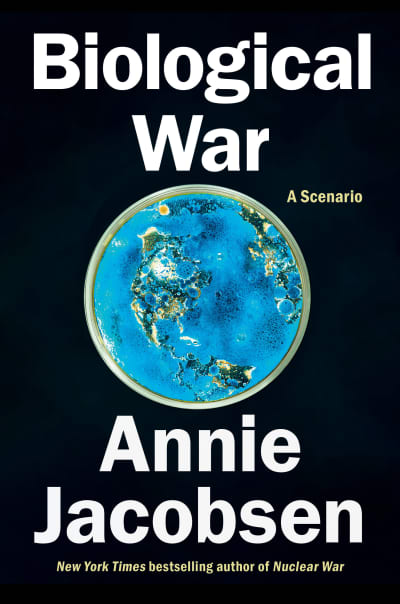
Biological War
The unexplained death of a laboratory worker at Russia’s Irkutsk Anti-Plague Research Institute has drawn international attention to the risks surrounding facilities that study dangerous pathogens. Russian authorities say the worker died after developing pneumonia of unknown cause and have not confirmed reports that she contracted plague or that a laboratory accident occurred. U.S. officials are monitoring the situation as investigators work to determine what happened.
That uncertainty has an eerie parallel to the scenario at the heart of Annie Jacobsen’s Biological War, which begins with an accidental explosion at a high-security biological research facility in Siberia and the urgent question of whether a dangerous pathogen has escaped. From there, Jacobsen traces how a biological crisis could unfold in the hours, days, and weeks that follow, drawing on interviews with experts in government, medicine, national security, and the military to examine the challenges of detection, transparency, containment, and response.
Watch Annie Jacobsen discuss Biological War on PBS NewsHour here.
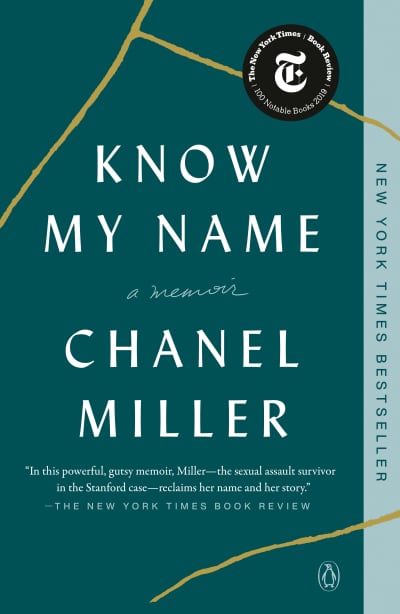
Know My Name
As renewed scrutiny of sexual assault at Cornell raises broader questions about campus culture, institutional accountability, and how universities respond when students report violence, Know My Name remains an essential account of what happens after sexual assault enters the legal and public systems.
In her acclaimed memoir, Chanel Miller reclaims her identity after being known publicly as “Emily Doe” and recounts the aftermath of the Stanford sexual assault case that drew national attention. With extraordinary clarity, Miller examines not only trauma and recovery, but the shame, disbelief, legal barriers, and institutional failures survivors can face even when there are witnesses and physical evidence.
At a moment when the Cornell case is again forcing a national conversation about how universities handle allegations of sexual violence, Know My Name offers a deeply personal lens on the systems, assumptions, and cultural attitudes that shape what happens to survivors after an assault.
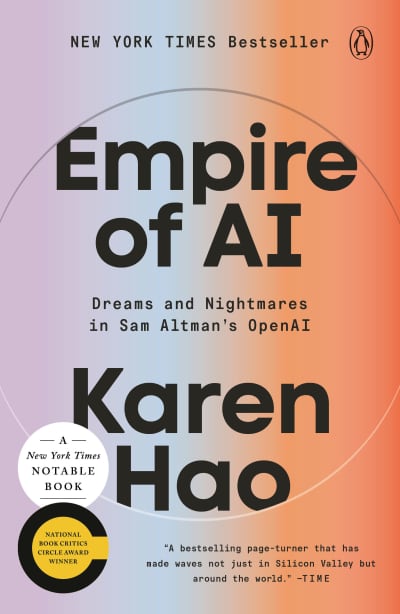
Empire of AI
As artificial intelligence becomes a defining issue in American politics and public life, debates over its power are moving far beyond the technology itself: who should regulate it, who pays for the energy and infrastructure it demands, how quickly development should move, and how much influence a small group of companies should have over the future.
In Empire of AI, investigative journalist Karen Hao traces the rise of OpenAI and Sam Altman while examining the enormous resources behind the AI boom, from computing power, energy, and water to data and human labor. Reporting from Silicon Valley and communities around the world, Hao reveals how the race to build ever more powerful systems is concentrating economic and political power while reshaping industries, communities, and governments.
Watch Karen Hao discuss the rise of OpenAI and the human, environmental, and political costs of the AI boom on PBS NewsHour here.
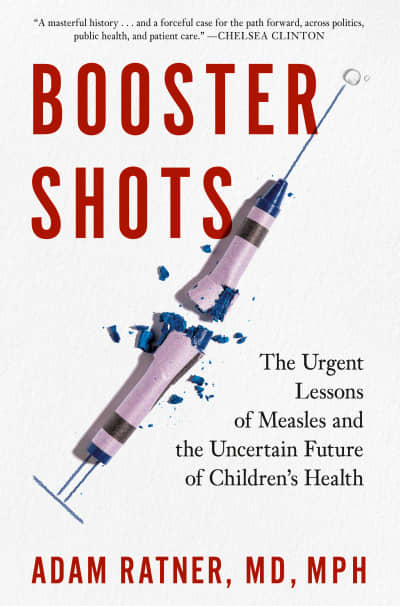
Booster Shots
As measles cases rise and vaccine confidence continues to erode, Booster Shots offers urgent context for understanding how preventable diseases return, and what it will take to stop the next public health crisis before it begins.
Pediatrician and infectious disease specialist Adam Ratner examines the resurgence of measles, the growth of the antivaccine movement, and the public health failures exposed by Covid-19. Blending patient stories, history, and scientific research, Booster Shots argues that every measles case is a warning sign: not only of declining trust in medicine, but of a weakened public health system that has forgotten hard-won lessons.
At a moment when vaccine-preventable diseases are again threatening children and communities, Booster Shots makes the case for rebuilding trust, strengthening public health infrastructure, and remembering the lessons that can help keep children safer.
Watch Dr. Ratner discuss the measles surge and declining vaccination rates on PBS NewsHour here.
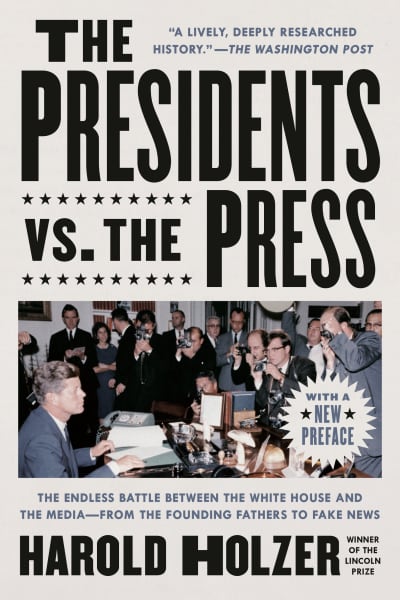
The Presidents vs. the Press
As tensions between the White House and the press once again dominate the national conversation, The Presidents vs. the Press offers essential historical context for understanding a conflict as old as the presidency itself.
Award-winning presidential historian Harold Holzer traces more than two centuries of battles between presidents and journalists, from George Washington’s private complaints about newspaper coverage to Richard Nixon’s attacks on the press and Donald Trump’s denunciations of “fake news.” Along the way, Holzer shows how presidents have tried to manage, bypass, charm, punish, and sometimes prosecute the journalists covering them.
At a moment of renewed debate over press access, presidential power, and the role of an independent media, The Presidents vs. the Press reveals how this uneasy relationship has shaped both the White House and American democracy from the beginning.

The Anxious Generation
As Meta faces a landmark legal reckoning over claims that its platforms harmed young users, The Anxious Generation offers essential context for understanding how smartphones, social media, and big tech have reshaped childhood.
In The Anxious Generation, social psychologist Jonathan Haidt lays out the facts about the epidemic of teen mental illness and the shift from a play-based childhood to a phone-based one. He then issues a clear call to action, describing steps that parents, teachers, schools, tech companies, and governments can take to restore a healthier, freer childhood.
At a moment when the design and impact of social platforms are under intense scrutiny, Haidt’s findings remain urgent reading for anyone concerned about protecting children, and ourselves, from the psychological costs of a phone-based life.
Read The New York Times on Jonathan Haidt and the Meta lawsuit here.
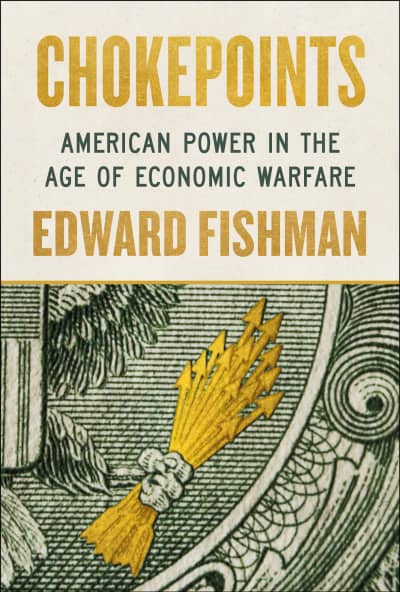
Chokepoints
The epic story of how America turned the world economy into a weapon, upending decades of globalization to confront a new authoritarian axis—Russia, China, and Iran.
In Chokepoints, Edward Fishman, a former top American sanctions official, takes us deep into the back rooms of power to reveal the untold history of the past two decades of U.S. foreign policy. As Vladimir Putin, Xi Jinping, and Ayatollah Khamenei wreaked havoc on the world stage, mavericks within the U.S. government built a fearsome new arsenal of economic weapons. The result is a new world order: an economic arms race among great powers and a fracturing global economy. Chokepoints is the definitive account of how America pioneered a new, hard-hitting style of economic warfare—and how it’s changing the world.
Listen to Edward Fishman discuss Iran’s weaponization of the Strait of Hormuz on NPR's The Indicator from Planet Money.
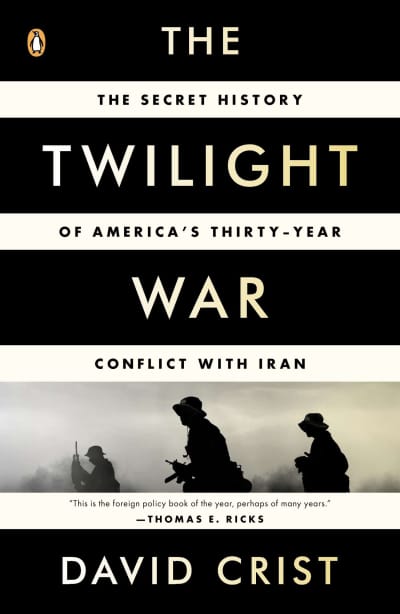
The Twilight War
"Deserves a spot on the short list of must-read books on United States-Iran relations." —The New York Times
The United States and Iran have been engaged in an unacknowledged secret war since the 1970s. This conflict has frustrated multiple American presidents, divided administrations, and repeatedly threatened to bring the two nations to the brink of open warfare. Drawing upon unparalleled access to senior officials and key documents of several U.S. administrations, David Crist, a senior historian in the federal government, breaks new ground on virtually every page of The Twilight War. From the Iranian Revolution to secret negotiations between Iran and the United States after 9/11, from Iran’s nuclear program to the secretive and deadly role of Qasem Soleimani, Crist brings vital new depth to our understanding of “the Iran problem”—and what the future of this tense relationship may bring.
For anyone seeing a deep perspective on the ongoing conflict between America, Israel and Iran, The Twilight War is essential reading.

In the Shadow of Liberty
A probing work of narrative history that reveals the hidden story of immigrant detention in the United States, deepening urgent national conversations around migration. Ana Raquel Minian shares this history in a saga tracing back to the 1800s—one in which immigrants have been held without recourse to their constitutional rights.
Braiding together the vivid stories of four migrants seeking to escape the turmoil of their homelands, In the Shadow of Liberty explores how sites of rightlessness have evolved, and how the changing political climate surrounding immigration has played out in individual lives, and at what cost.
Read their recent essay for The New York Times: America Is a Nation of Immigrants That Has Not Lived Up to Its Promise