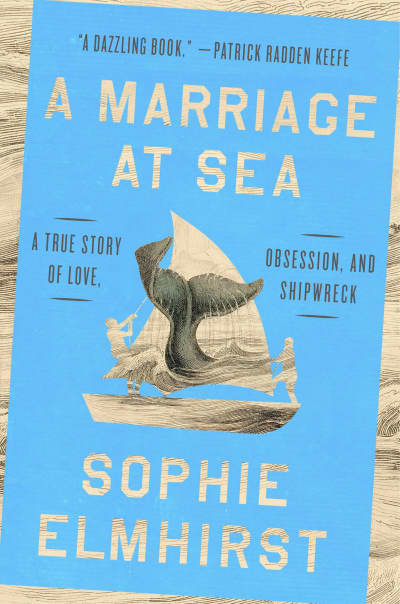
THE RUNAWAY NEW YORK TIMES BESTSELLER & ONE OF BARACK OBAMA’S FAVORITE BOOKS OF 2025
“This is nonfiction that reads like fiction – the best kind. Elmhirst’s retelling is a triumph, second only to the seemingly impossible feat of Maurice and Maralyn themselves. You won’t be able to put it down.” – USA Today
“Remarkable… I found myself, alternately, holding my breath as I read at top speed, wandering rooms in search of someone to read aloud to, and placing the book facedown, arrested by quiet statements that left me reeling with their depth.” – The New York Times
The electrifying true story of a young couple shipwrecked at sea: a mind-blowing tale of obsession, survival, and partnership stretched to its limits.
Maurice and Maralyn make an odd couple. He’s a loner, awkward and obsessive; she’s charismatic and ambitious. But they share a horror of wasting their lives. And they dream – as we all dream – of running away from it all. What if they quit their jobs, sold their house, bought a boat, and sailed away?
Most of us begin and end with the daydream. But Maurice began to study nautical navigation. Maralyn made detailed lists of provisions. And in June 1972, they set sail. For nearly a year all went well, until deep in the Pacific, a breaching whale knocked a hole in their boat and it sank beneath the waves.
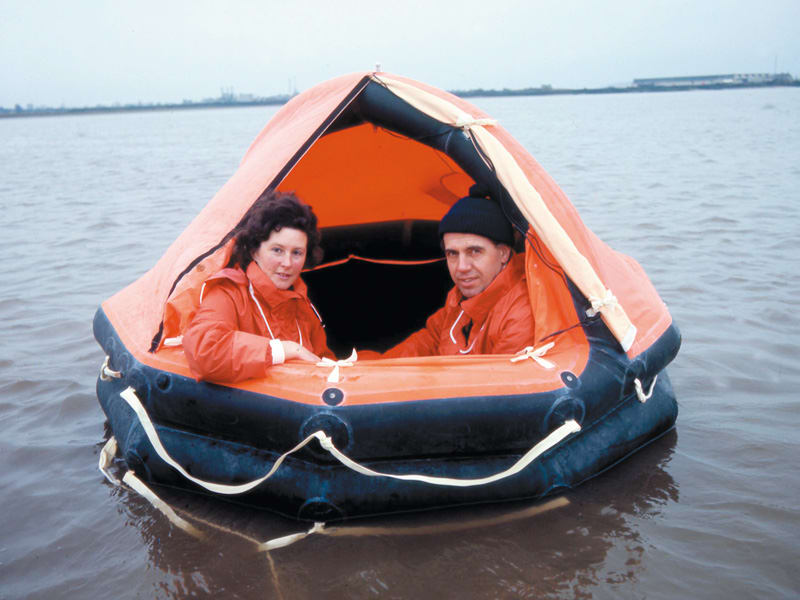
What ensues is a jaw-dropping fight to survive in the wild ocean, with little hope of rescue. Alone together for months in a tiny rubber raft, starving and exhausted, Maurice and Maralyn have to find not only ways to stay alive but ways to get along, as their inner demons emerge and their marriage is put to the greatest of tests. Although they could run away from the world, they can’t run away from themselves.

Dear reader:
A year ago, I was sent a PDF of this manuscript with no preamble. “Read this and thought of you” was the accompanying text from my friend. I inhaled the whole book in one sitting, thinking it was a novel. The storytelling was so intimate and compelling, plus there’s no way – no way! – this could be a true story.
Reader: it’s a true story. Once upon a time there was an average married couple, working drab jobs in the suburbs of 1970s England, who decided to build a boat and just sail away from it all. At first their voyage went smoothly, but early one morning in the Pacific, a whale knocked a hole in their boat. Maurice and Maralyn had minutes to haul everything they could grab onto a tiny rubber life raft, where they floated watching all their life’s work and saving sink out of sight.
What ensues is a jaw-dropping story of a desperate fight to survive on the wild ocean, with little hope of rescue. What I love about this absolute page-turner of a book is that yes, it is one of the most gripping survival stories I’ve ever read, but it’s also psychologically riveting. Starving and exhausted, this couple has to find ways to work together for weeks, then months, under the most extreme conditions imaginable.
A Marriage at Sea is the first book from prize-winning journalist Sophie Elmhirst. Sophie pulled from a huge archive of diaries (including ones written on the life raft), letters, and interviews with surviving friends and family in order to write this highly unusual nonfiction work.
In quiet moments at night, I think of Maurice and Maralyn out alone in that raft. I hope they come to live in your heart and mind, as they have in mine.
Jynne Dilling
VP, Deputy Publisher, Riverhead Books

Tell us about Maurice and Maralyn Bailey and how their love story turned into one of the most dramatic adventures ever recorded. How did you originally come across it?
I came across Maurice and Maralyn’s story during the pandemic while I was researching an article about people trying to escape, perhaps for obvious reasons. Among the stories, mostly of lone men surviving at sea, a black and white photograph of a man and a woman caught my eye. When I learned this was a married couple who had spent nearly four months adrift together on a raft in the middle of the Pacific, I was hooked. It wasn't just the extremity of their experience that captured my attention, but its intimacy. It seemed improbable that they'd survived such an event physically, but I was just as intrigued as to how they'd survived it psychologically and emotionally - not least how their marriage had survived.
Maurice and Maralyn had set off in 1973 to sail around the world. After being shipwrecked, they spent four months eating raw turtle, sharks, fish and birds, learning how to dissect and swallow raw flesh, to suck the juice out of turtle eyeballs, going to the toilet in a biscuit tin, becoming desperately ill, bored out of their minds, and nearly dying. Somehow they kept each other alive - but how? This was the mystery I wanted to solve, and the story I wanted to tell.
Adrift at sea for 118 days, Maurice and Maralyn found themselves pushed to both physical and psychological extremes. What do you imagine was the greatest challenge of all these elements?
Without a doubt, their greatest struggles were mental. Once they had figured out the basics of survival, their systems for eating and drinking and sleeping - though imperfect and uncomfortable - the challenge was how to keep themselves hopeful, purposeful and occupied. As much as this is a story of great drama - a shipwreck, storms, near-death, an unlikely rescue - it is also a story of how to survive in nothingness. When it’s calm, the middle of the ocean can feel like a desert. Nothing moves, nothing happens. For weeks at a time they saw no sign of human existence. Their refusal – Maralyn’s refusal – to succumb to despair in these moments is a testament to her resourcefulness and resilience, but also reveals a deeper truth, that survival requires not just pragmatism, but a belief in the possibility of survival.
A Marriage at Sea a combines a dramatic, adrenalized narrative with a deeply intimate story of one couple’s marriage. Tell us more about their dynamic.
Their dynamic was established long before their voyage. Maurice had had a difficult childhood, lacking in affection. By the time he met Maralyn in his late twenties, he was beset by self-doubt and lived a lonely, frustrated existence in the English town of Derby. Maralyn was younger, lively and confident. This imbalance continued through their lives. Adrift on the ocean, she thought positively and pragmatically, while he turned on himself, desolate and self-punishing. Maralyn had the power in their relationship, and used that power to hold him up, to such an extent that without her, he struggled to know the point of his existence at all.
The book grapples with themes of isolation, depression, and grief, yet hope ultimately moves the Baileys’ forward. What attracted you to write about hope in this way?
It's funny: a lot of people have asked me who I relate to more, Maurice or Maralyn. I wish I could say Maralyn. In fact, I share some of Maurice's most self-defeating tendencies, namely the inclination to doubt oneself, to detect internal failings, even to give up entirely. Maralyn was my education: here was another way to be. She is alien to almost all my instincts and yet offers a necessary correction. What if you privilege hope: what if you put trust in it? What if you let it guide your choices and dictate your actions? It is radical, in its way. Don't get me wrong, sometimes the militancy of her hope feels close to delusion, an act of willful imagination. And yet, in this case, it worked. It kept them alive. It couldn't keep them alive forever - nothing can do that - and that's why it was important for me to write the end of their lives too, and the long period of grief and isolation that Maurice suffered after Maralyn's death. This isn't a fairytale, after all; they were always mortal. But her spirit and her hope worked on him and helped him over a lifetime, I think, even in grief. And it left him with the richest legacy of all, which was her love.
You explore what it means to seek solitude with another person, the challenges of relationships, the psychology of survival, and so much more. How is this a book about both human connection and the human condition?
Maurice and Maralyn’s time on the raft was almost like a thought experiment; the reality of any relationship taken to its ultimate extreme. After all, all relationships suffer tests. All couples have to face the worst at some point, and look to the other to see what they will find. Maurice and Maralyn had to square up to a truth we often avoid in our lives, which is the reality of our own mortality and that of those we love. Their experience offered a way of delving into the fundamentals of life and how we live it, its brevity and fragility, and how the presence of someone else – human connection – is often what guides us through.
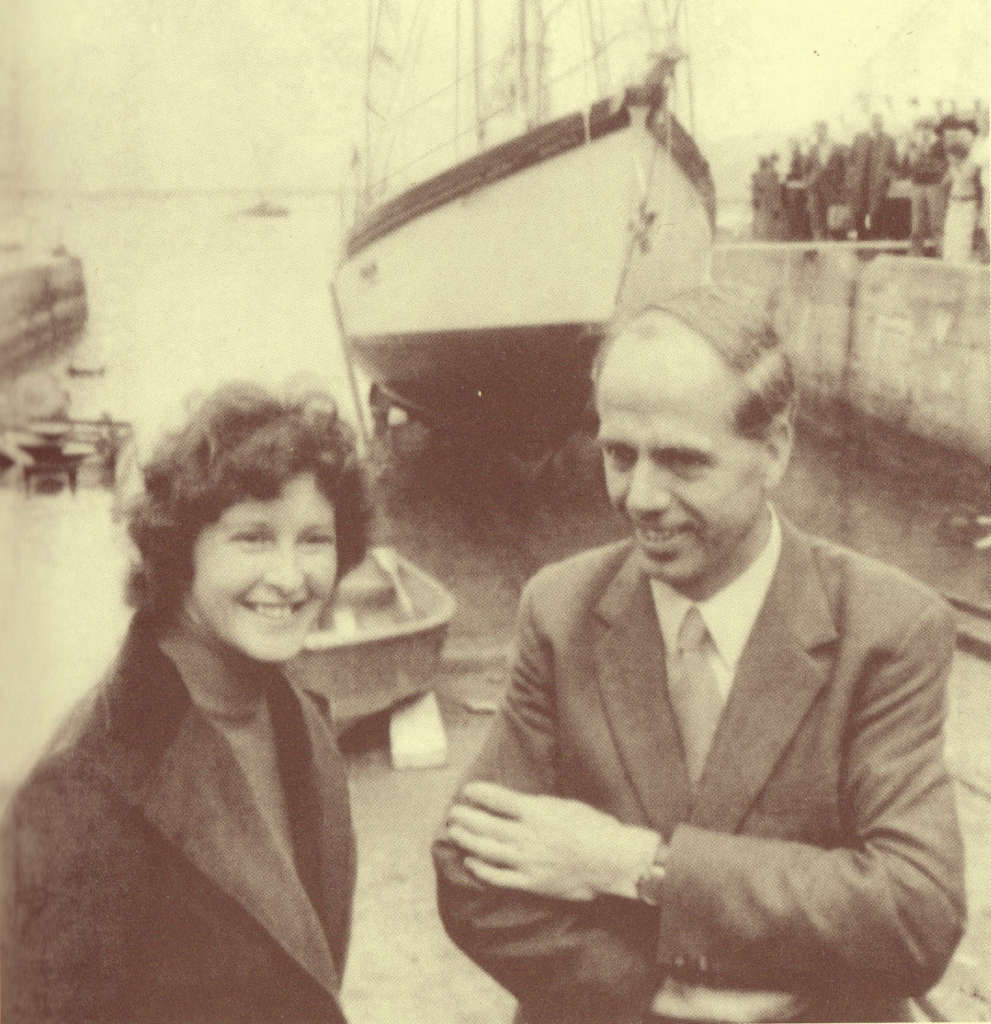
Maurice and Maralyn set sail from England
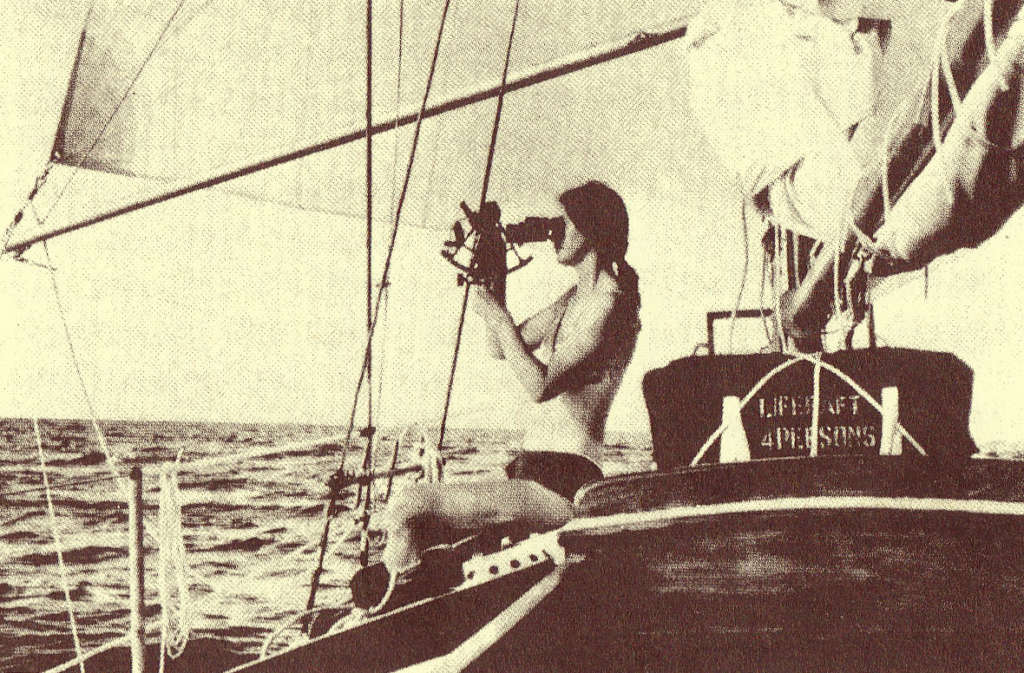
Maralyn using sextant to sail
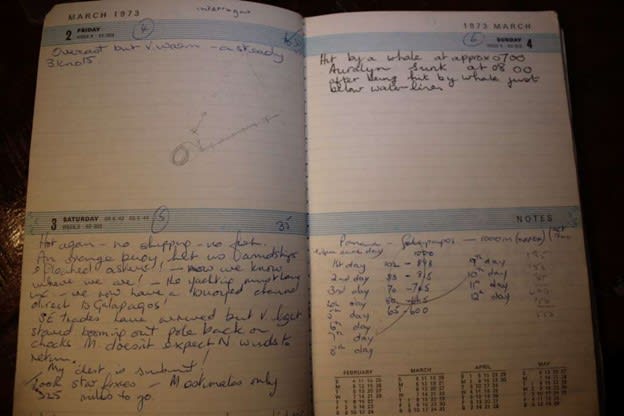
Maralyn's diary the day of the boat sinking
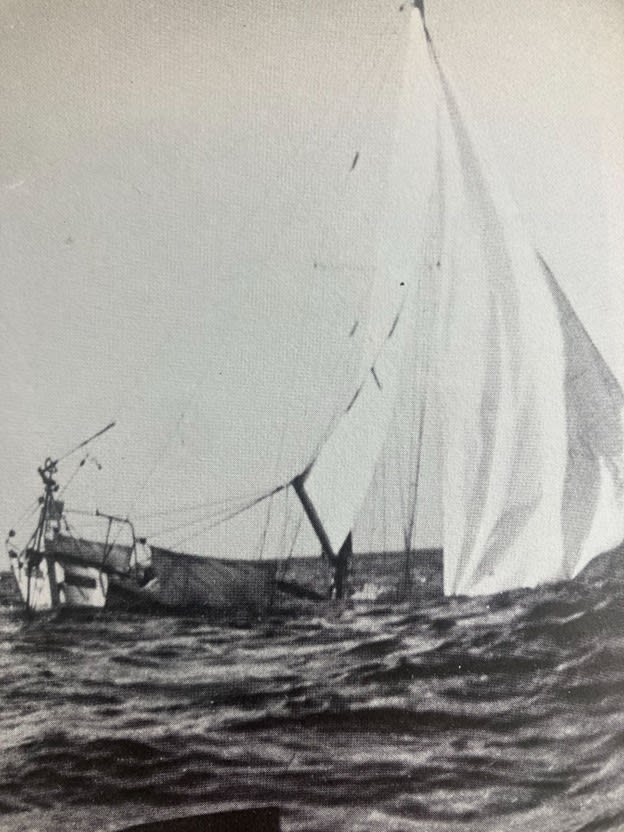
Maralyn's photo of their boat sinking
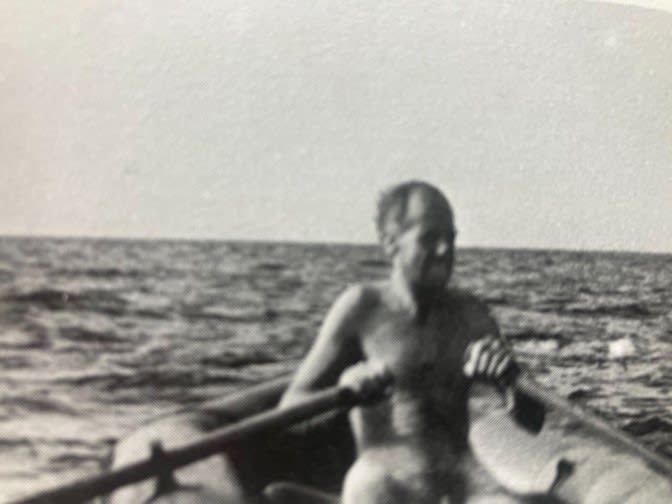
Maralyn's photo of Maurice rowing after shipwreck
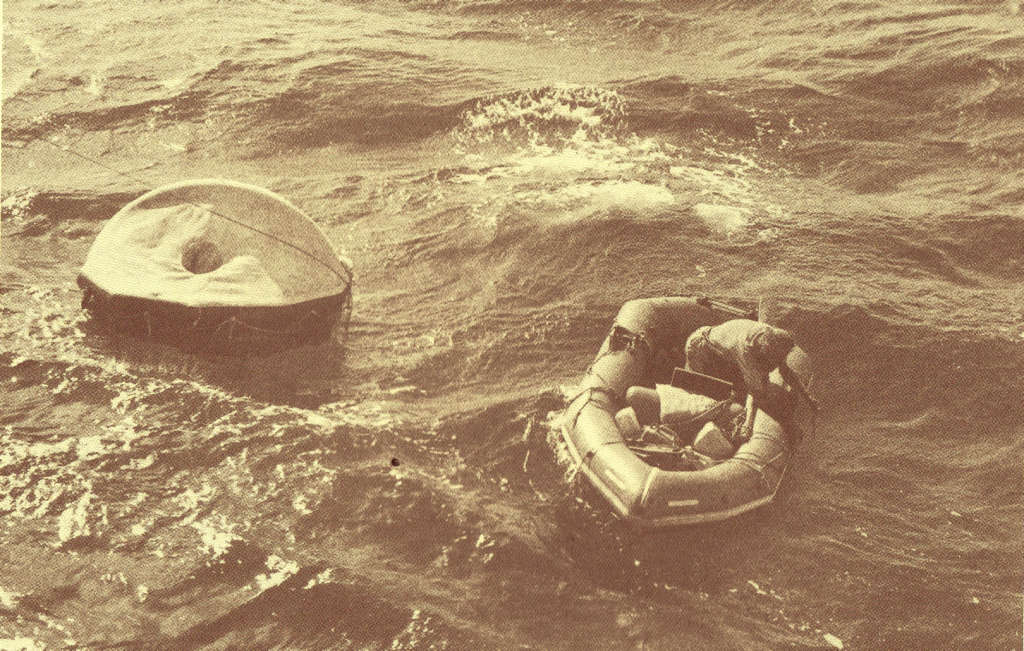
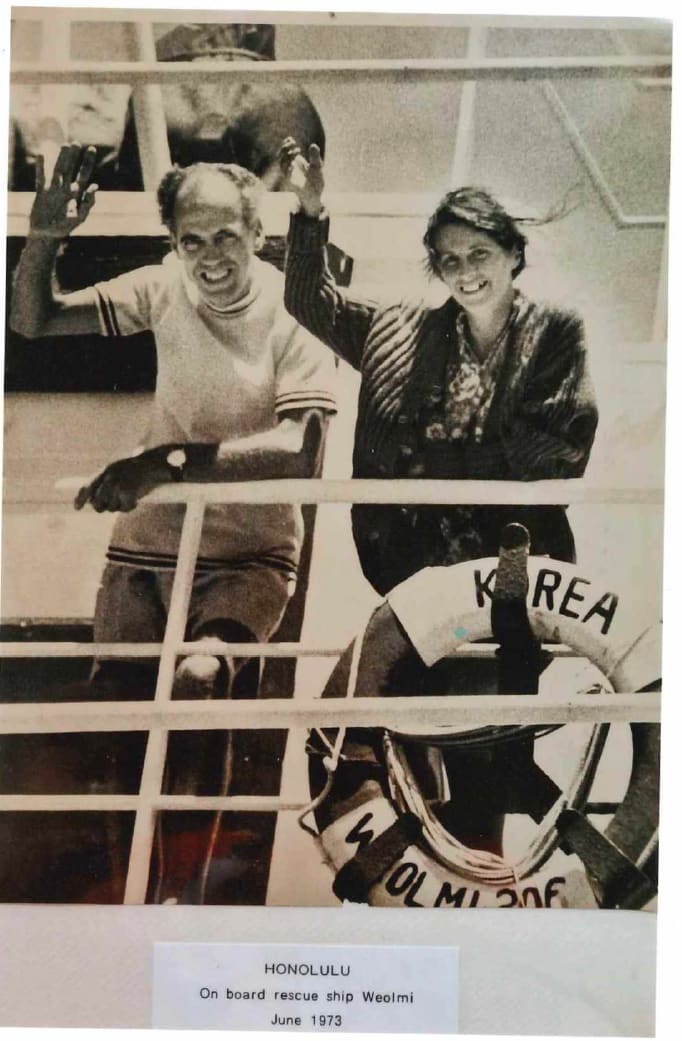
Castaways spotted from the Korean boat
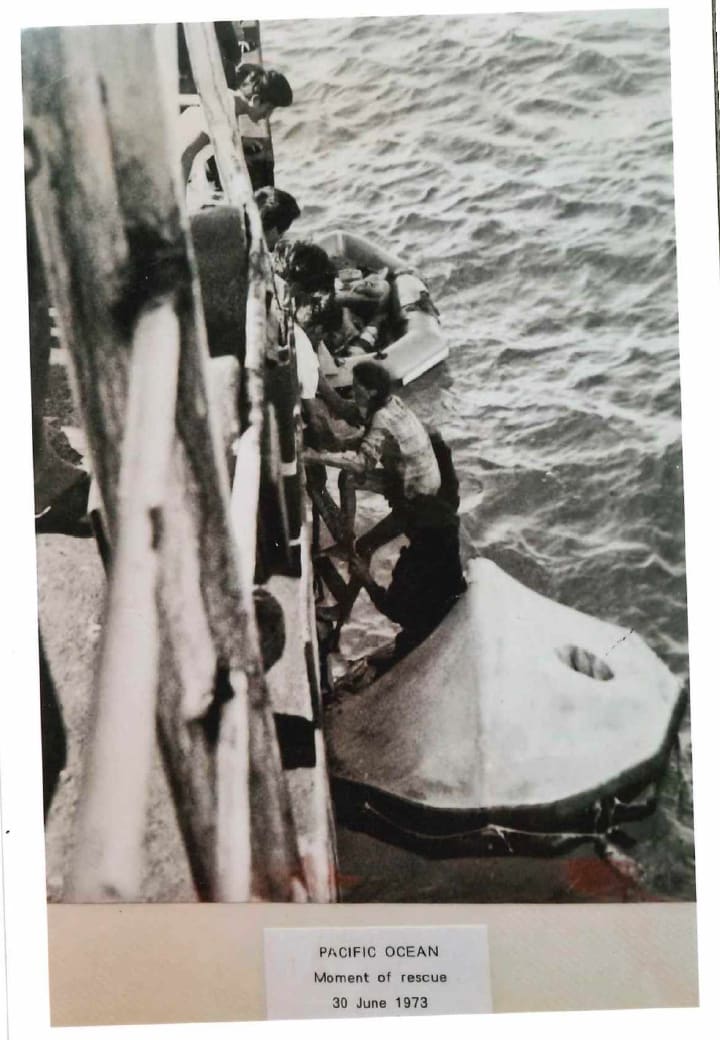
Moment of rescue in June 1973
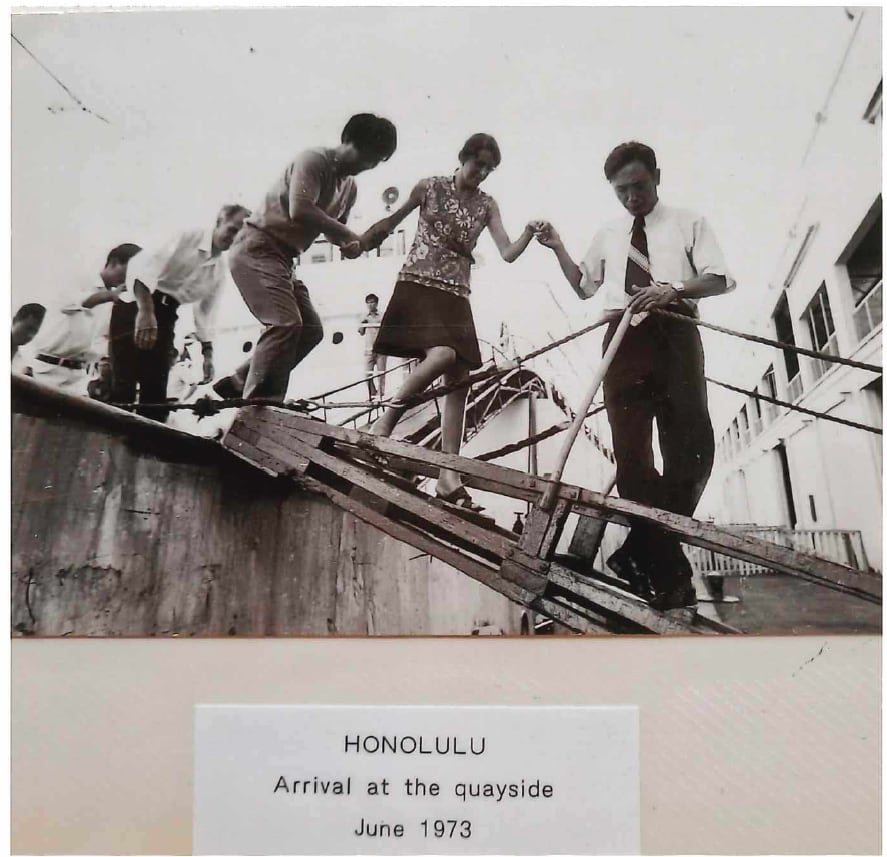
Arriving quayside in Hawaii after rescue
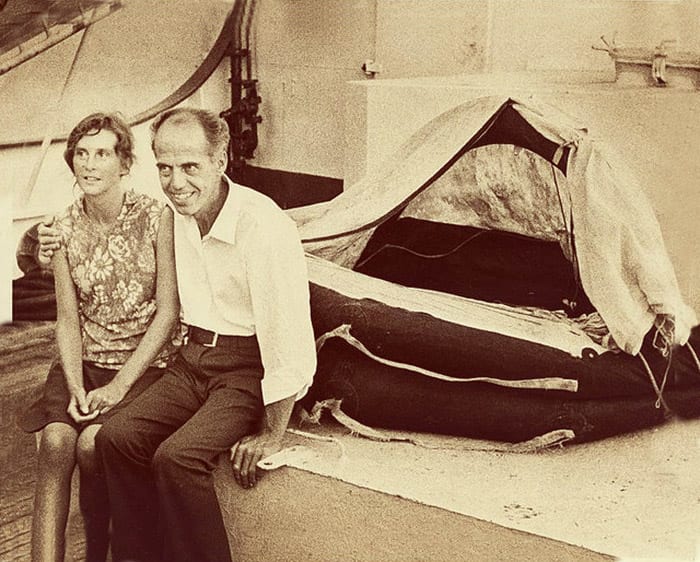
Maurice and Maralyn after rescue with their raft
Maurice and Maralyn later in life
Praise
“Such an emotionally vivid portrait of a couple in isolation that I was shocked it wasn’t fiction. How could a writer get so deeply into the minds of two real people in such extraordinary circumstances? … So brilliantly depicted.” – Elle, Best Books of Summer
“Stark, elemental, and sure to be a classic, Sophie Elmhirst’s beautifully written tale suggests that perhaps the only thing more difficult than braving the high seas is navigating the vicissitudes of marriage . . . while keeping one's sanity intact.” —Hampton Sides, New York Times bestselling author of The Wide Wide Sea
“A beautiful meditation on endurance, codependence, and the power of love. A dazzling book.” —Patrick Radden Keefe, New York Times bestselling author of Say Nothing
“A mysterious, beautiful book about fate and marriage and the kind of loneliness that is honored and nourished rather than avoided.” —Rachel Aviv, New York Times bestselling author of Strangers to Ourselves
“As thoughtful a tale about marriage, for better and worse, as you are likely to read.” —London Observer
“An extraordinary survival story.” —London Sunday Times
“Thought-provoking…compelling…tender… An ideal gift for a friend or family who likes incredible true stories of survival. But it’s also a book about love and hubris. And in that sense, it’s a book for us all.” —Pandora Sykes
“Electrifying… A tender portrait of two unconventional souls.” —The Guardian
“Melds together the sweet conjugal bonds of a quirky pair with the adrenaline kick of Jaws… A remarkable portrait of a marriage kept afloat against the odds.” —Financial Times
“A Marriage at Sea somehow contrives to be both gripping and elegiac. Sophie Elmhirst’s graceful, confident prose is novelistic in its pleasures and profoundly moving in its impact.” —Kaliane Bradley, New York Times bestselling author of The Ministry of Time

Footage of the arrival of Maurice and Marilyn in Seoul after rescue, taken August 5, 1973.


Photo: © Sophie Davidson
Sophie Elmhirst is an award-winning journalist who writes regularly for The Guardian Long Read and The Economist; her work has also appeared in The New York Times Magazine, The New Yorker, and Harper’s Bazaar, among other places. She’s the winner of the British Press Award for Feature Writer of the Year and a Foreign Press Award. She lives in London and A Marriage at Sea is her first book.